
Queue-it
Bringing confidence to online traffic management

Queue-it’s GO platform originally catered to technical users with complex online traffic data, but non-technical stakeholders needed simpler access to key insights.
I led the redesign to deliver shareable, login-free dashboards for at-a-glance metrics
Queue-it
Rewriting Complexity

The Queue-it GO platform had been developed by many people over many years, which led to inconsistent and complex platform texts that made it harder than necessary for customers to get things done.
I set out to rewrite the entire platform and, along the way, created a UX writing best-practice guide, a terminology framework, and a glossary dictionary to ensure long-term consistency.
Low-Fi Concerts
Connecting Artists and Hosts

Low-Fi is a platform and marketplace that connects artists with concert hosts and guests interested in home concerts.
As Head of Product, I worked closely with the CEO and team to enhance the platform’s usability and self-service features, increasing concerts from a few per month to one per day. Through extensive user research and testing, I streamlined the experience and helped expand the platform to multiple markets through localization and region-specific improvements.
Nota
From CD's to Accessible Streaming

Nota is an online audio and e-book library that's designed for people with dyslexia and visual disabilities.
As Head of Design, I helped transform the platform from a CD ordering service into a modern streaming platform with a mobile app. My focus was on accessibility and usability, ensuring a seamless experience for diverse users. Through extensive collaboration and complex user testing, I made the platform more modern, welcoming, and easy to use.
Previous work

2004-2017
Before I started working with UX and Product Design, I worked for many years as a Graphic Designer, Illustrator, Copywriter, and Motion Graphics Designer.You can check out some of my past work at my Behānce profile.
LOw-Fi Concerts
Connecting artists and hosts
Low-Fi is a platform and marketplace that connects artists with concert hosts and guests interested in home concerts.
As Head of Product, I worked closely with the CEO and the Low-Fi team to develop and design the platform. Through extensive user research and testing, I improved usability and self-service capabilities, significantly increasing the number of concerts from a few per month to one per day. Additionally, I helped expand the platform’s reach to multiple markets by implementing localized and location-specific changes.Beyond the user platform, I also developed an internal admin platform for Low-Fi to manage hosts, artists, and concerts efficiently.

Main Page

Concert page

Phone screens

Creators cards

Custom icons


Queue-it
Case
Making the complex (somewhat) simple
The Queue-it GO platform had been developed by many people over many years, which led to inconsistent and complex platform texts that made it harder than necessary for customers to get things done.
I set out to rewrite the entire platform and, along the way, created a UX writing best-practice guide, a terminology framework, and a glossary dictionary to ensure long-term consistency.
The goal
Glansable, quick overview
Highly visual and simple data
Easy to share
The process
What we came from
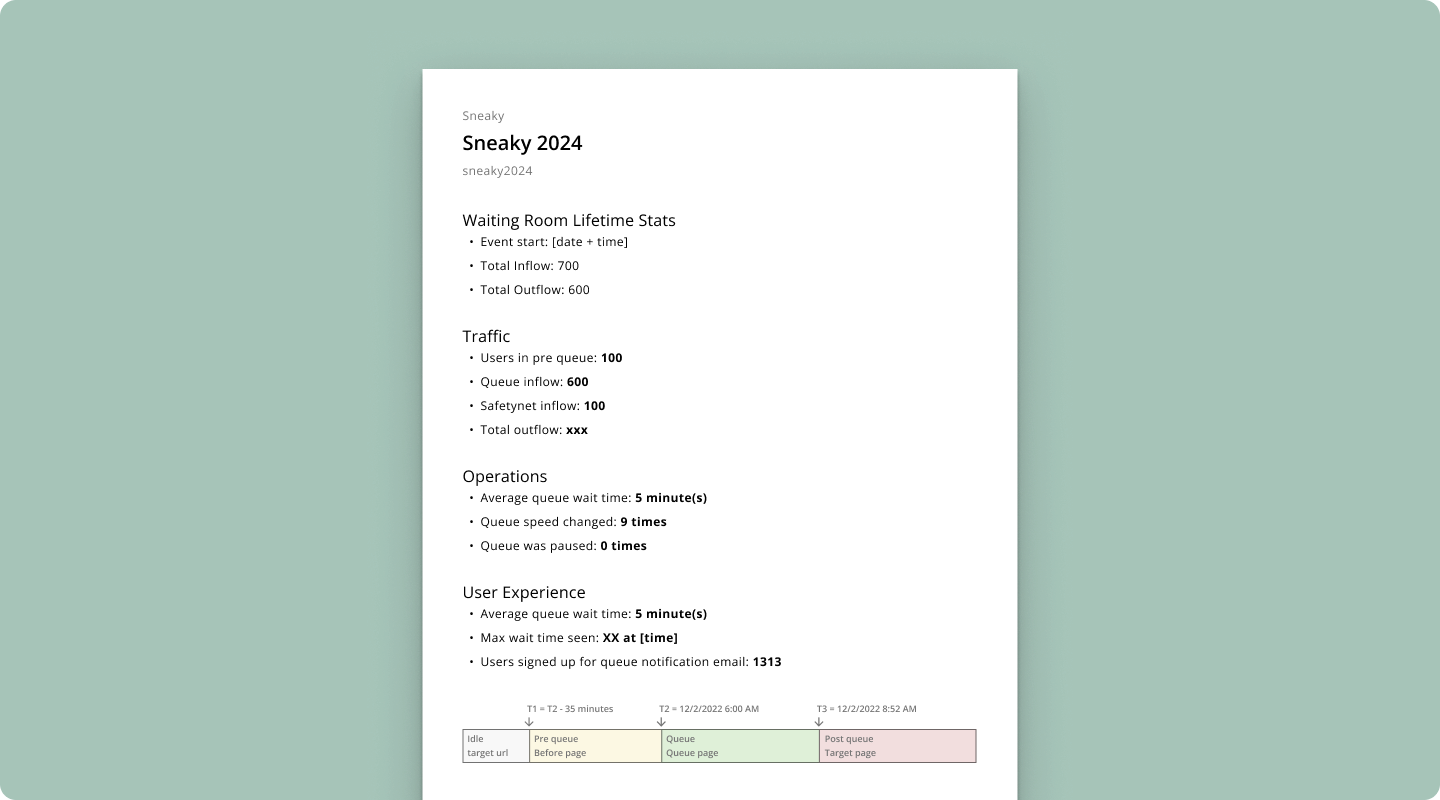
We had already started with a very simple report that users could generate with an overview of their traffic, but the feedback was that it was hard to understand and use for sharing.
What is needed
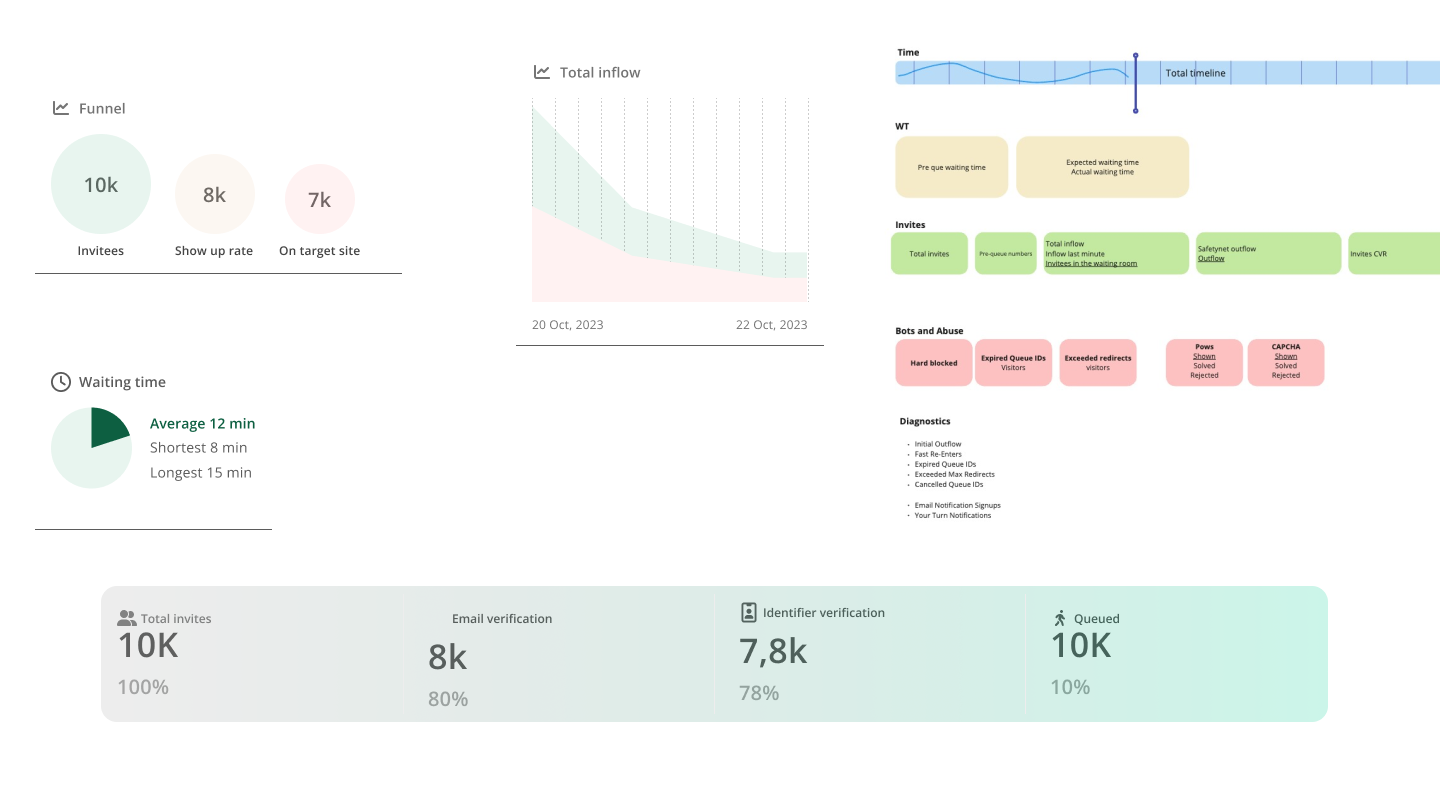
I started by looking at all the data points the report should contain. We had interviewed users to figure out which were most valuable to them. The report would be a supplement to a very complex data insights dashboard, so it was important to focus on the user group that was unfamiliar with the platform or didn't have direct access.
New user group, new needs
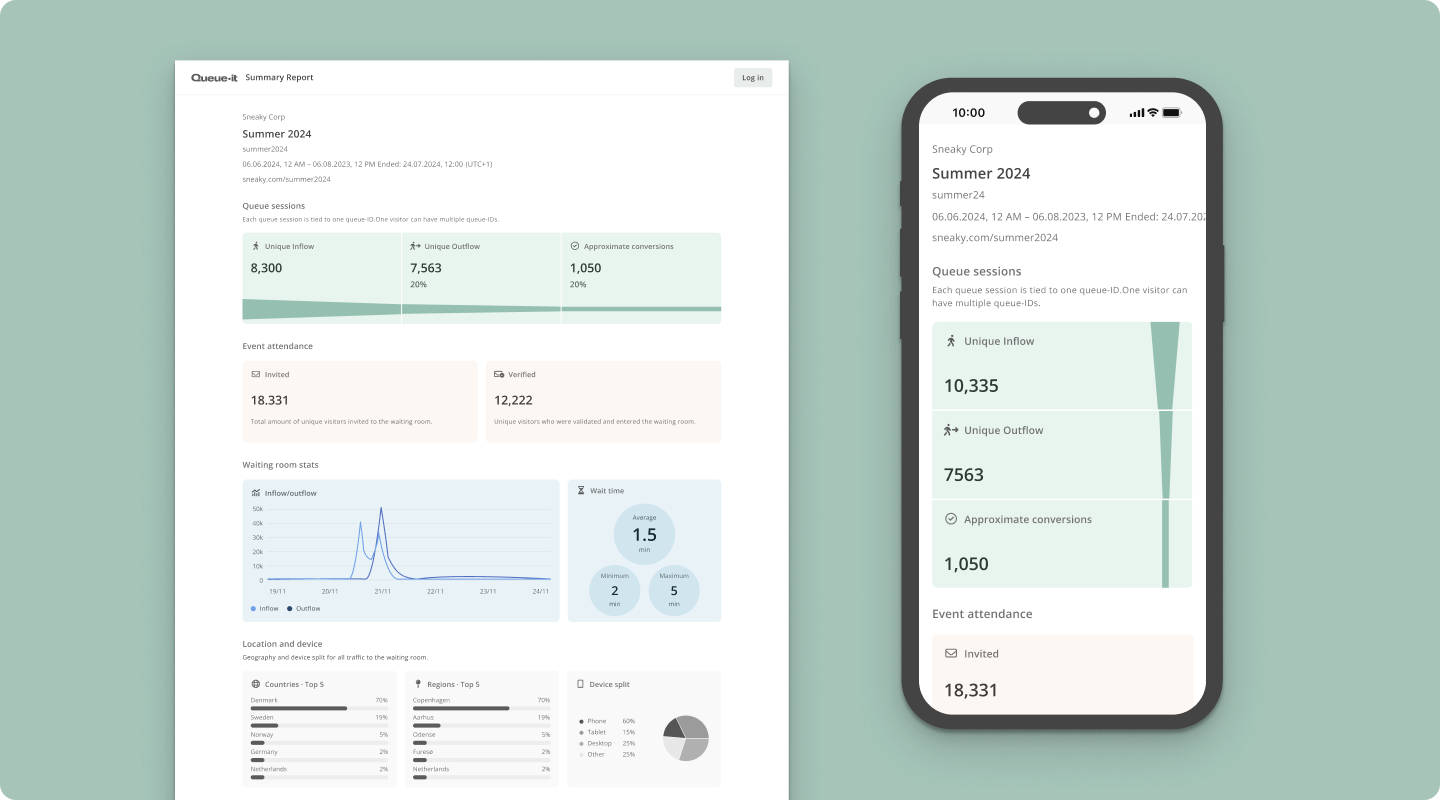
The rest of the platform is mainly built for desktop and does not fare well on mobile, but here we had a part that might be shared with a new user group who were often on the road and only had their mobile. So the report had to be easily accessible on mobile and readable with little to no context of the rest of the platform.
New user group, new look and feel
Queue-it’s monitor page tracks real-time traffic via color-coded tiles that separate metrics rather than consistently represent data states. I adopted this tile color scheme for graphs and dashboards (e.g., inflow green, wait times blue), preserving familiarity while boosting scannability for stakeholders—no training needed.
Testing
Is this what you need
We tested the report with stakeholders using their real waiting room data to see if it met their needs. Most metrics were right, but non-regular users struggled with the terminology. We iterated by rewriting texts and labels for better clarity and accessibility.
Sticking to the core
Users had many feature requests, but to deliver a usable report quickly, we prioritized essentials and simplified the product by cutting non-critical elements:
No option to set a custom date
No option to download the report
No option to investigate the individual datapoints further.
The Solution
The solution
We ended up with a very simple but a solution that was useful for the users immediately.
Queue-it saved a lot of time instantly by no longer having to send out customized reports manually.
A note on the future of data reports (yes it's AI)
The idea was always to further keep working adding missing features as download locally and custom time frames, but it was postponed due to a shift i prioritization.Since the the development of this report AI have made it possible to generate reports from data much more flexible than the solution here provide. And I'm already looking into how that could work.
Queue-it
Case
Rewriting complexity
The Queue-it GO platform is where customers manage their traffic and set up waiting rooms for their website. It had been developed by many people over many years, so it suffered from inconsistent and complex platform texts that made it harder than necessary for customers to get things done.
Challenge
The Queue-it GO platform consists of a lot of copy that helps users navigate the platform. Users are not only met with a lot of guidance but also new and often highly technical terms.
Feedback from customers had been that they didn't feel confident using the platform.
All copy had been written over the years by various developers and product managers. Terms had evolved and changed over time, so the same things would be described using different terms.
Process
Setting the ground rules
Before getting started, I looked into best practices for writing UX copy and how to write for an international user group who often didn't have English as their first language.
A workshop was held to define how we should write on the platform, and a set of rules and guidelines was established.
Team work!
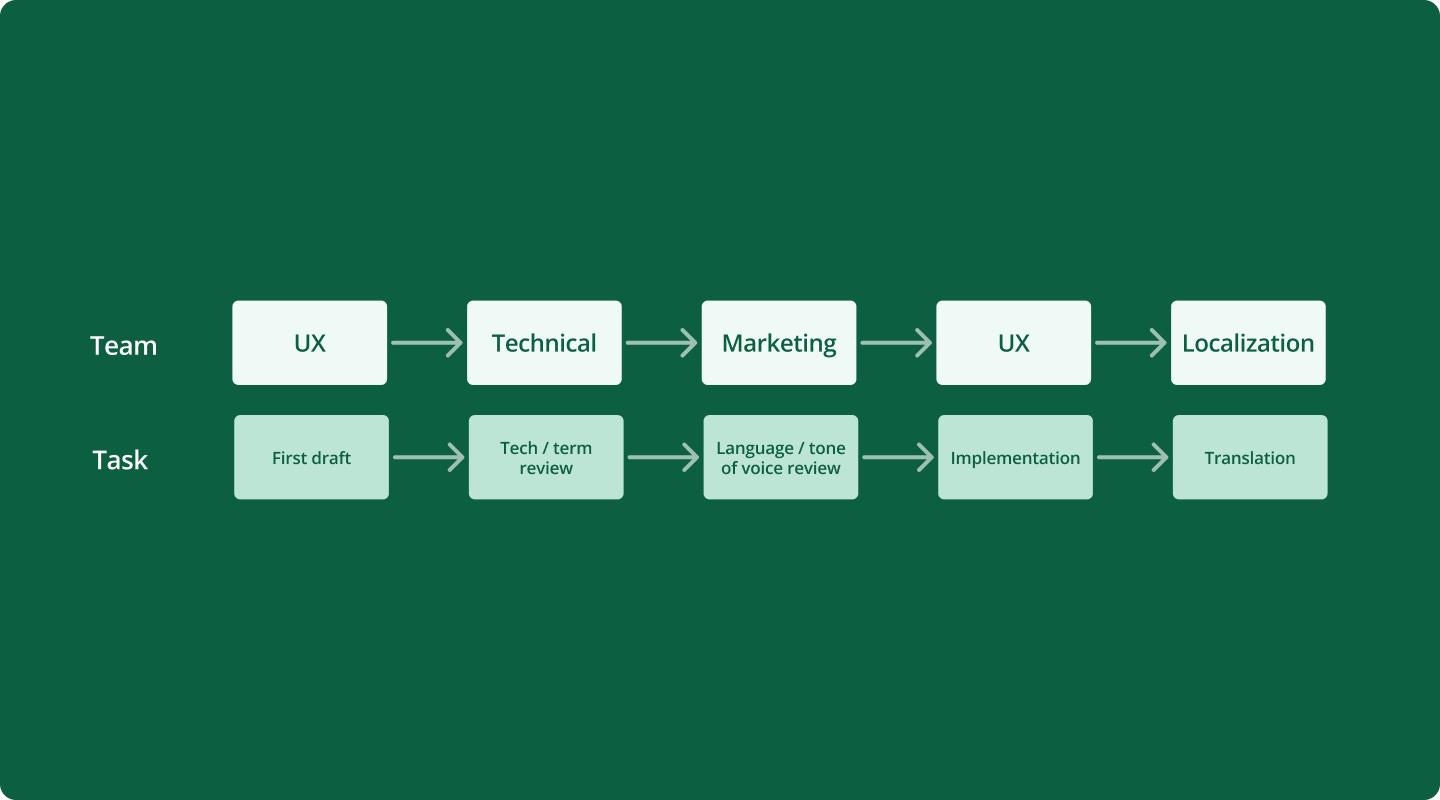
Next up I assembled a team consisting of people from technical support, marketing, and localization, and set up a structured review and rewrite process — from first draft through reviews, rewrites, and finally implementation and translation.
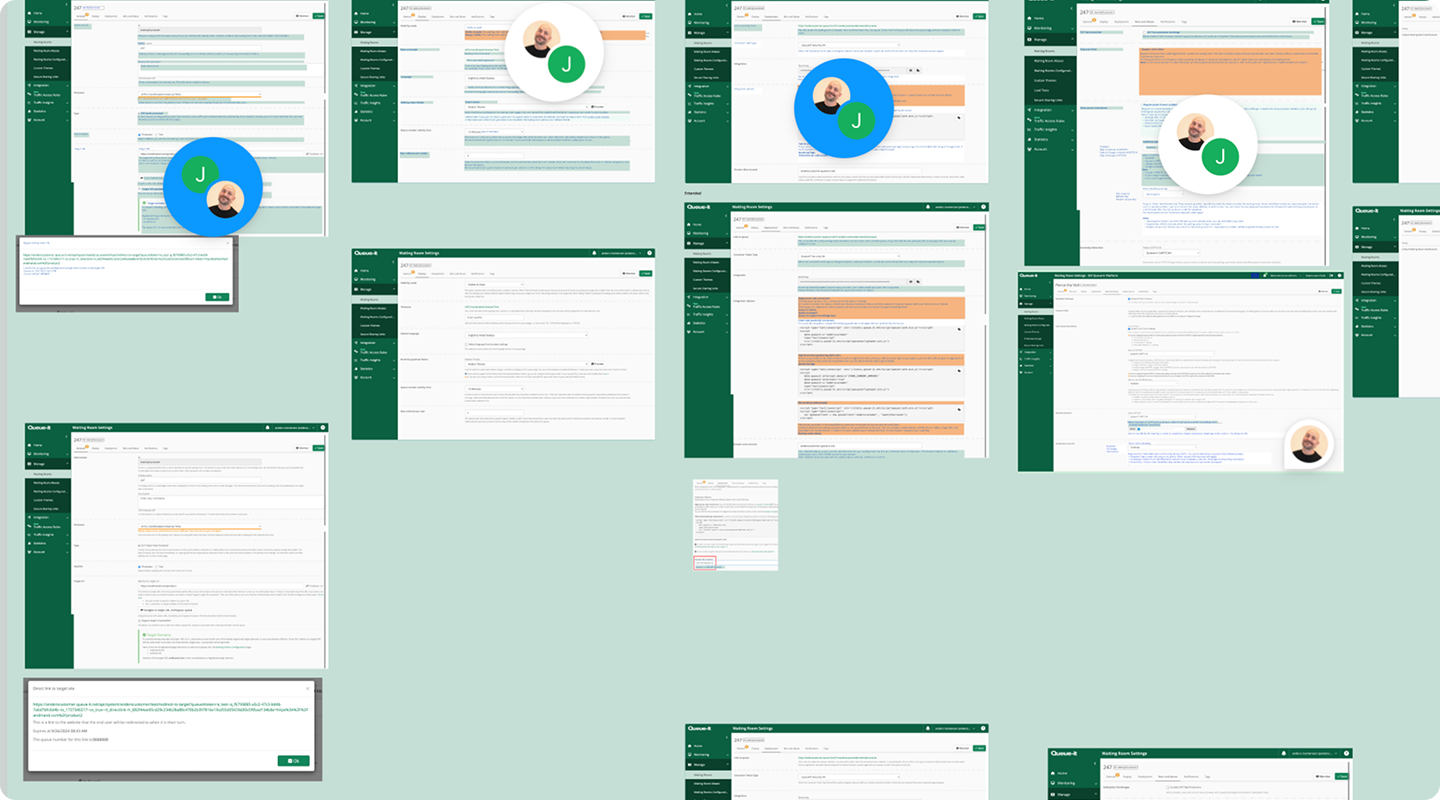
The process was straightforward: screenshots with new copy added on top so the context would always be clear, and everyone could add their comments directly.
It turned out to be quite tiresome, so we later moved to a shared document.
What started as a simple process turned out to be longer and more complicated than expected — there was often uncertainty, even among us, about what the different terms meant.
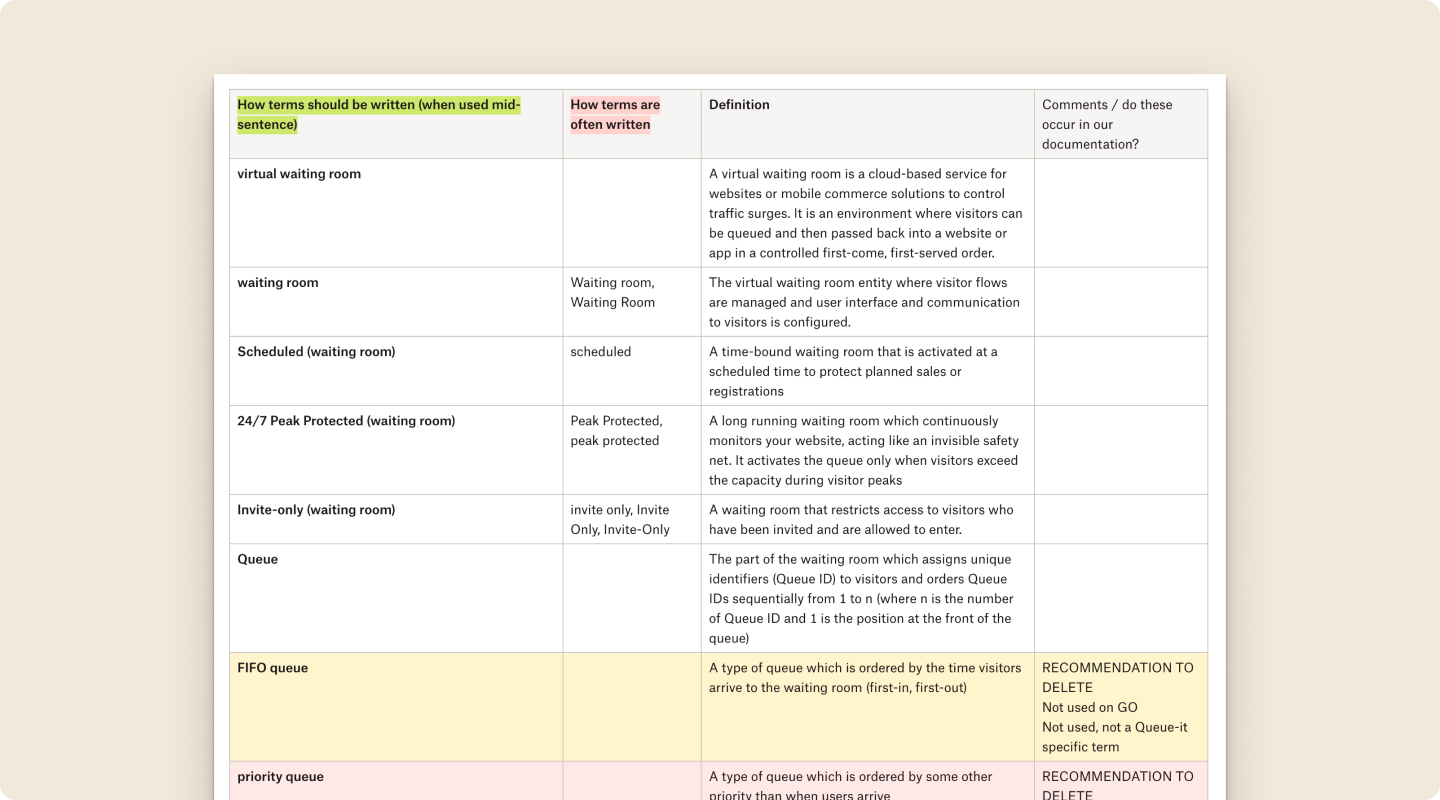
What do we call it again?
During the process we collected all insconsistent terms and wordings in en ever expanding "library". That could be used as reference.
Result
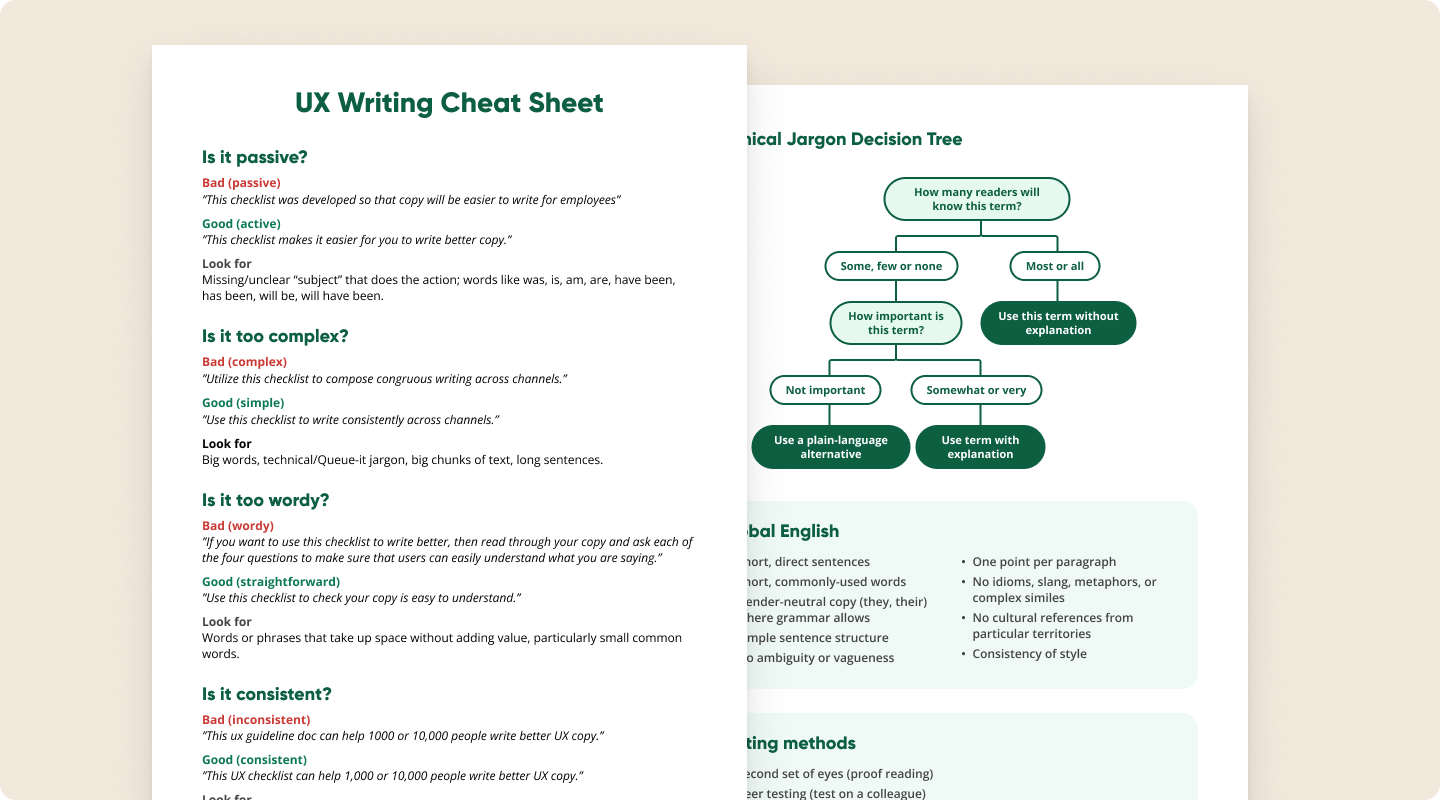
Handing it off
A critical part of the project was also finding a new process for writing copy for the platform. Together with a copy writer from marketing, I created a simple "UX Writing Cheat Sheet" for anyone to use when checking their writing.
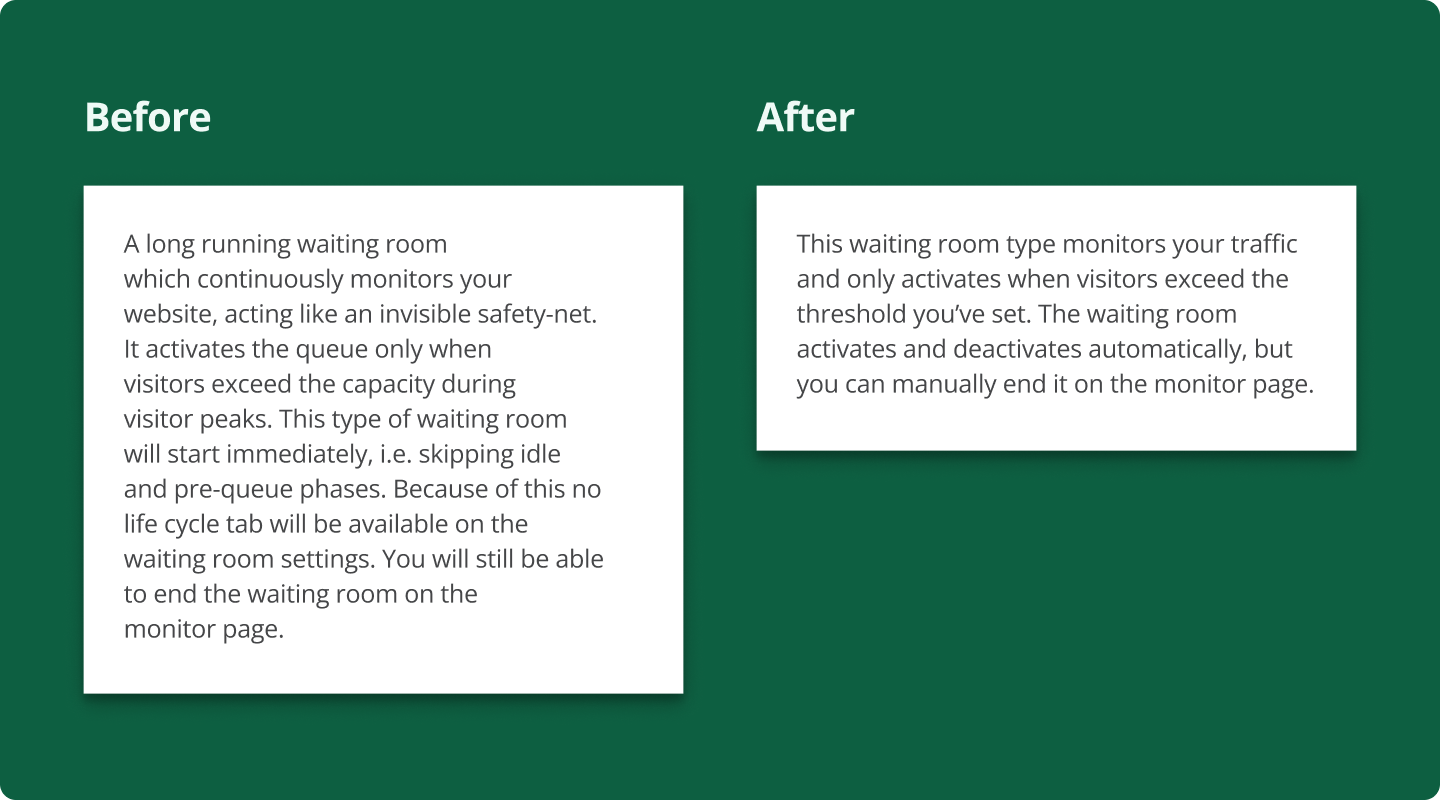
The impact
During the process, we managed to reduce the length of the copy by about one third and make it easier to read. Internally, there is now a process for writing copy, and terms are much more consistent.
The process alone shed light on how we communicate and write on the platform, and continues to do so going forward.
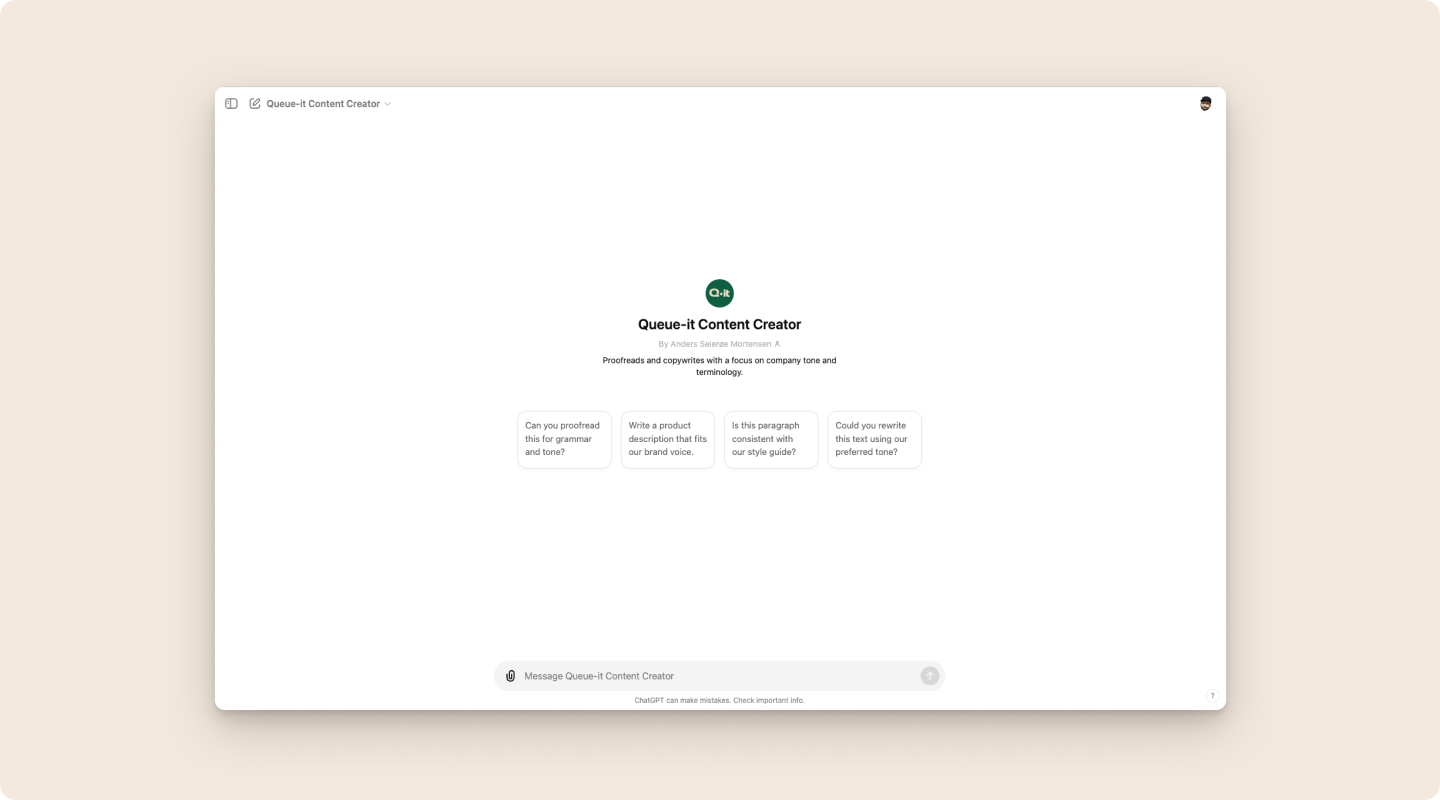
Going forward
ll the learnings, rules, and terms from the process I later used to train an AI agent, which we now use to create and review copy for the platform.
Case
Booking vs Hosting
This is a typical UX case for the Low-Fi platform.
Opposite regular live music booking platforms, Low-Fi concerts are created between the host (booker) and the artist, and they also sell tickets to guests through the platform.
This difference wasn't very transparent for the hosts, that often would book the artist for a fixed fee.
My process is a bit simplified here for clarity.


